
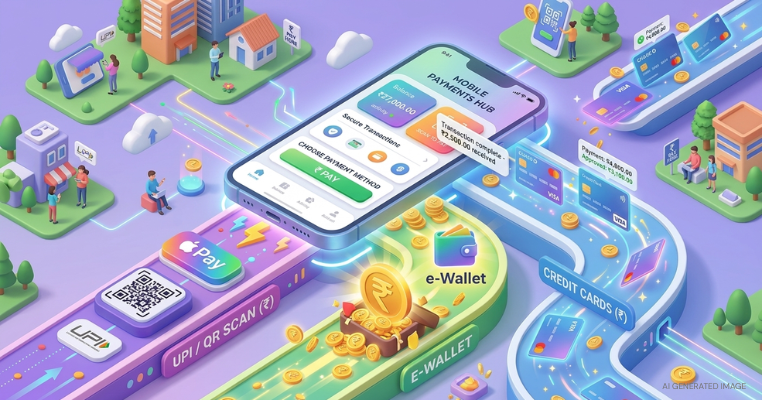
Online payments in India have changed a lot in the last few years. Today, customers have multiple options like UPI, debit/credit cards, and digital wallets. But the big question for every business owner is — which payment method do customers actually prefer?
If you get this right, it could mean a sharp rise in your sales, better customer experience, and lower dropout rates.
In this blog, we will compare UPI vs Cards vs Wallets, understand customer behaviour and help you decide what works best for your e-commerce or online business.
Table of Contents
ToggleWhat Are the Main Payment Methods in India?
India’s digital payment ecosystem mainly revolves around three popular methods: UPI, cards, and wallets. Each one serves a different type of user and situation.
1. UPI (Unified Payments Interface)
UPI is a real-time payment system that allows instant bank-to-bank transfers using mobile devices. It has become extremely popular due to its simplicity and speed.
Users can pay using:
- UPI ID
- QR code
- Mobile number linked to the bank
There is no need to enter long details or maintain a separate balance.
2. Debit and Credit Cards
Cards have been used for online transactions for many years and are still widely accepted across all platforms.
Customers need to enter:
- Card number
- Expiry date
- CVV
- OTP for verification
While cards are reliable, the process is slightly longer compared to modern methods like UPI.
3. Digital Wallets
Wallets allow users to store money digitally and make payments easily. They were very popular before UPI became mainstream.
To use wallets:
- Users must first add money
- Then use the wallet balance to pay
Although they offer convenience, they add an extra step in the payment journey.
UPI vs Cards vs Wallets: Detailed Comparison
To understand customer preference, we need to compare these methods based on real-world factors that matter the most.
1. Speed and Checkout Experience
Speed is one of the biggest reasons why customers choose one payment method over another.
- UPI offers instant payments within seconds. Users simply approve the request and the payment is done.
- Cards take more time because users need to manually enter details and wait for OTP verification.
- Wallets are fast only if there is already a balance available; otherwise, users need to recharge first.
Because of this, customers prefer methods that reduce checkout time. A faster process means less frustration and fewer drop-offs.
👉 Winner: UPI
2. Ease of Use
Customers always choose the simplest option available.
- UPI is extremely easy, especially with QR codes and saved IDs.
- Cards require multiple steps and careful input, which can feel tiring on mobile devices.
- Wallets are simple to use but involve an extra step of adding money.
Today’s users want minimal effort, especially while shopping on mobile phones.
👉 Winner: UPI
3. Security and Trust
Security is a major concern for online users, especially first-time buyers.
- UPI uses PIN-based authentication and bank-level security systems.
- Cards are protected with OTP, CVV, and fraud detection systems.
- Wallets are secure but depend on app-level protection and balance limits.
Although all three methods are safe, customers often trust cards for large transactions and UPI for everyday payments.
👉 Winner: UPI + Cards (both trusted)
4. Payment Success Rate
Failed payments can lead to frustration and lost sales.
- UPI has improved a lot, but sometimes server or bank issues can cause delays.
- Cards are generally stable and have a strong infrastructure.
- Wallets have high success rates if balance is available.
Customers prefer methods that work smoothly without repeated failures.
👉 Winner: Cards (slightly ahead), UPI close behind
5. Convenience for Customers
Convenience is not just about speed—it includes overall experience.
- UPI does not require remembering details or maintaining balance.
- Cards require careful handling of sensitive details.
- Wallets require pre-loading money, which some users find inconvenient.
Because of this, UPI fits perfectly into daily life and quick transactions.
👉 Winner: UPI
6. Popularity and Usage Trends in India
The Indian market clearly shows changing customer behaviour.
- UPI transactions are growing rapidly every year
- Cards are still widely used, especially in e-commerce
- Wallet usage is slowly declining
Customers today prefer mobile-first solutions, and UPI perfectly matches that need.
👉 Winner: UPI (most preferred payment method)
Why UPI Is Becoming the First Choice
UPI has changed how people pay online. It is no longer just an option—it is the default choice for many users.
1. Mobile-First Experience
Most users access websites through mobile phones. UPI is designed for mobile, making payments smoother and quicker.
2. No Need to Add Money
Unlike wallets, UPI connects directly to bank accounts, removing the need for recharges.
3. Faster Decision Making
Customers are more likely to complete a purchase when payment is quick and easy.
4. Widely Accepted
From small vendors to large e-commerce platforms, UPI is accepted almost everywhere.
Why Cards Are Still Important?
Even though UPI is leading, cards are not going anywhere.
1. High-Value Transactions
Customers usually prefer cards for expensive purchases because they offer higher transaction limits and better security features. This makes users feel more confident while making large payments online.
2. EMI and Credit Benefits
Credit cards provide EMI options, reward points, and cashback offers, which make them attractive for many users. These benefits help customers manage their expenses easily and also save money on purchases.
3. International Payments
Cards are very important for international transactions, especially when shopping on global websites. Since UPI is not widely accepted outside India, cards become the main option for making payments worldwide.
Where Wallets Still Stand Today?
Wallets have lost some popularity, but they still have a place in the payment ecosystem.
1. Offers and Cashback
Wallet companies often provide attractive discounts, cashback, and special deals to attract users. These offers encourage customers to choose wallets for payments, especially during online shopping or recharges.
2. Quick Small Payments
Wallets are still useful for making small and quick payments like mobile recharges, utility bills, or local purchases. They help users complete transactions faster without entering bank or card details every time.
However, many users are now shifting to UPI because it is more convenient and directly connected to their bank accounts.
How Customer Preference Affects Your Business?
Understanding UPI vs Cards vs Wallets is not just about knowledge—it directly impacts your business performance.
1. Checkout Experience Impacts Sales
A long or confusing checkout process can frustrate customers and break their buying flow. When users face too many steps or delays, they often leave the website without completing their purchase, which directly affects your sales and conversion rate.
2. Payment Options Build Trust
When customers see multiple payment options available, they feel more secure and in control of their choice. This flexibility builds trust and increases the chances of completing the transaction, especially for first-time users.
3. Mobile Optimization Is Key
Most users prefer shopping through their mobile phones, so having a mobile-friendly payment experience is very important. Simple and fast options like UPI make it easier for customers to complete payments quickly, improving overall user experience and conversions.
Best Payment Strategy for E-commerce Businesses
Instead of relying on just one payment method, businesses should offer all major options so customers can choose what they are most comfortable with, which ultimately improves the overall payment experience and increases the chances of successful transactions.
Recommended Setup
- UPI (primary option)
- Debit/Credit Cards
- Wallets (as an additional option)
This approach ensures that every customer finds a suitable payment method.
Future of Digital Payments in India
The future of payments is clearly moving towards faster and simpler systems.
- UPI will continue to dominate everyday transactions
- Cards will remain strong for premium use cases
- Wallets may evolve or reduce further
Businesses that adapt to these trends will have a competitive advantage.
Conclusion
When we compare UPI vs Cards vs Wallets, it becomes clear that UPI is the most preferred payment method among Indian customers today. Its speed, ease of use, and mobile-friendly nature make it ideal for modern users.
However, cards still play an important role in high-value and international transactions, while wallets continue to serve niche use cases.
For any e-commerce or online business, the smartest strategy is to offer all three options and focus on delivering a smooth and fast checkout experience. Because in the end, the easier the payment process, the higher your chances of converting visitors into customers.
FAQs
1. Which is the best payment method for customers in India?
UPI is currently the best payment method for customers due to its speed, simplicity, and wide acceptance.
2. Is UPI better than cards?
UPI is better for quick and small payments, while cards are preferred for large transactions and EMI options.
3. Are digital wallets still useful?
Yes, wallets are still useful for cashback offers and small payments, but their usage is decreasing.
4. Why do customers prefer faster payment methods?
Faster payments reduce effort and save time, leading to a better user experience
5. Should businesses offer multiple payment options?
Yes, offering UPI, cards, and wallets increases customer satisfaction and improves conversion rates.